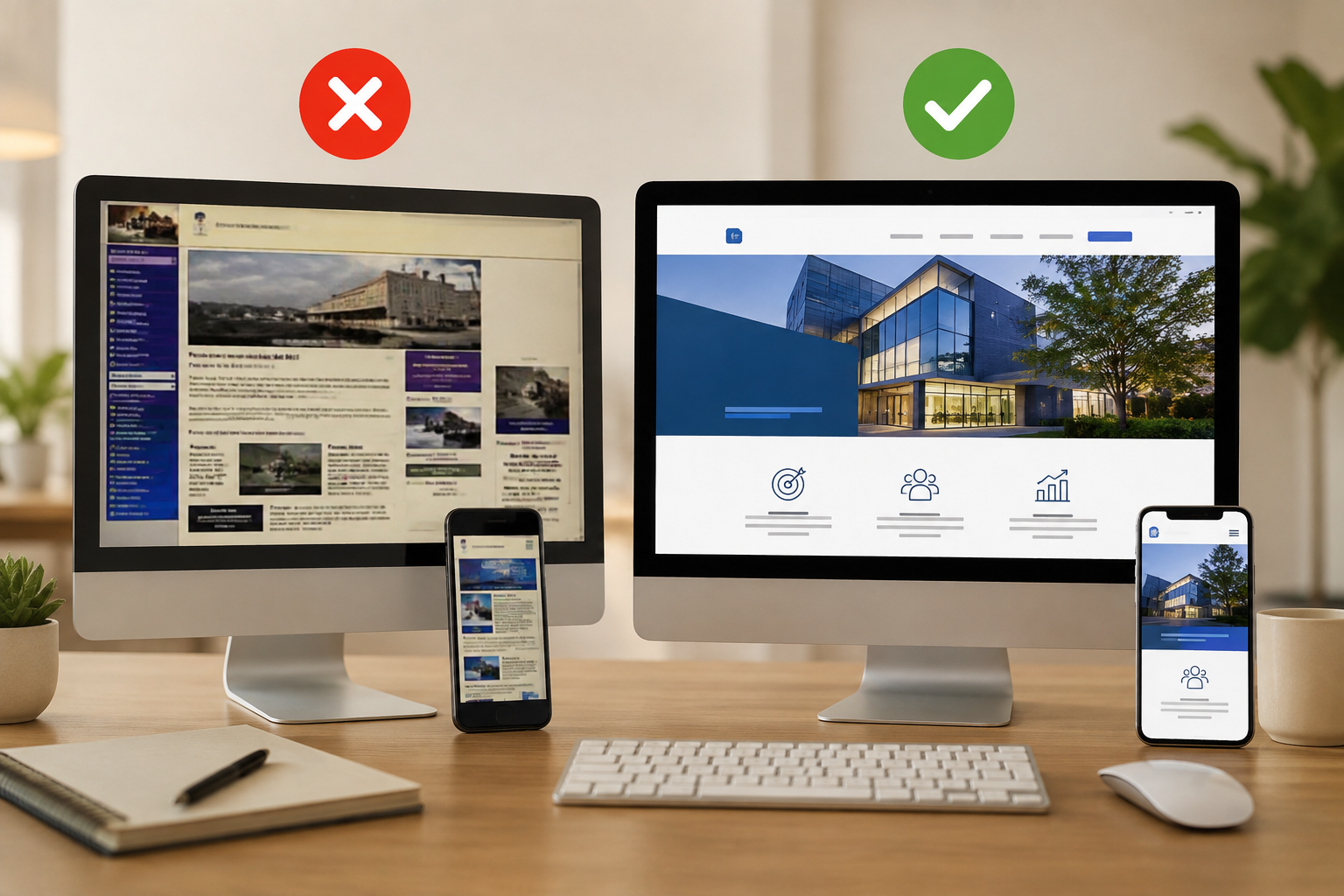
Your website is often the first impression customers have of your business. A professional, easy-to-use website can build trust and encourage visitors to contact you. On the other hand, a poorly designed website can cause potential customers to leave before they ever learn about your products or services.
Here are 10 common website design mistakes businesses should avoid.
1. Outdated Website Design
An old-fashioned website can make your business appear less professional or trustworthy.
Modern websites should have a clean layout, consistent branding, easy navigation, and a design that reflects your current business.
If your website looks like it was built years ago, it may be time for an update.
2. Poor Mobile Experience
A large number of people browse websites from smartphones.
If your website is difficult to read, navigate, or use on a mobile device, you could be losing potential customers.
A responsive website should automatically adapt to different screen sizes and provide a smooth experience on phones, tablets, and desktops.
3. Confusing Navigation
Visitors should be able to find important information quickly.
If users have to search through multiple pages to find your services, contact information, or pricing, they may simply leave.
Keep your navigation simple and organize pages logically.
4. No Clear Call to Action
Your website should tell visitors what to do next.
Examples include:
- Request a Quote
- Contact Us
- Schedule a Consultation
- Call Now
- Learn More
- Get Started
Clear calls to action can guide visitors toward becoming leads or customers.
5. Slow Page Speed
People don’t want to wait for a website to load.
Large images, unnecessary scripts, poor hosting, and outdated technology can slow down your website.
A faster website can provide a better user experience and help visitors stay engaged.
6. Too Much Text
Long blocks of text can be difficult to read, especially on mobile devices.
Instead, break content into:
- Short paragraphs.
- Headings.
- Bullet points.
- Visual elements.
- Clear sections.
This makes your website easier to scan and helps visitors find the information they need.
7. Weak or Unclear Messaging
Visitors should understand what your business offers within seconds of landing on your website.
Your homepage should clearly answer:
What do you do?
Who do you help?
Why should customers choose you?
Clear messaging can make your website much more effective.
8. Missing Trust Signals
Customers want to know that your business is legitimate and reliable.
Consider adding:
- Customer reviews.
- Testimonials.
- Case studies.
- Certifications.
- Awards.
- Client logos.
- Portfolio examples.
These elements can help potential customers feel more confident about contacting your business.
9. Ignoring SEO
A beautiful website won’t help much if potential customers can’t find it.
Your website should be built with SEO in mind, including proper page structure, relevant keywords, useful content, internal links, mobile responsiveness, and technical optimization.
Web design and SEO should work together rather than being treated as separate strategies.
10. No Conversion Strategy
One of the biggest mistakes is designing a website without considering what you want visitors to do.
A business website should have clear goals.
For example:
Visitor → Service Page → Trust → Call to Action → Lead
Every major page should support the customer journey.
How Professional Web Design Can Help
Professional web design combines visual design, user experience, technology, content, SEO, and conversion strategy.
At Lighthouse Internet Media, web design is approached as part of a broader digital marketing strategy. A well-designed website can help businesses strengthen their online presence, improve user experience, and create more opportunities to generate leads.
Final Thoughts
Your website should do more than simply look attractive.
It should communicate your value, build trust, make information easy to find, work well on mobile devices, and guide visitors toward taking action.
Avoiding these common website design mistakes can help create a stronger online experience and give your business a better opportunity to turn website visitors into customers.
If your website is outdated, difficult to use, or not generating the results you expect, Lighthouse Internet Media can help you develop a more effective digital presence.
Frequently Asked Questions
How often should a website be redesigned?
There is no fixed schedule, but a redesign may be necessary when your website becomes outdated, difficult to use, slow, or ineffective at generating leads.
Does website design affect SEO?
Yes. Site structure, mobile usability, page speed, navigation, and technical implementation can all influence your SEO performance.
What makes a website user-friendly?
Simple navigation, readable content, fast loading, mobile responsiveness, clear messaging, and visible calls to action all contribute to a better user experience.
Can a website generate leads?
Yes. With clear messaging, strong calls to action, useful content, trust signals, and a conversion-focused design, a website can become an important lead-generation tool.