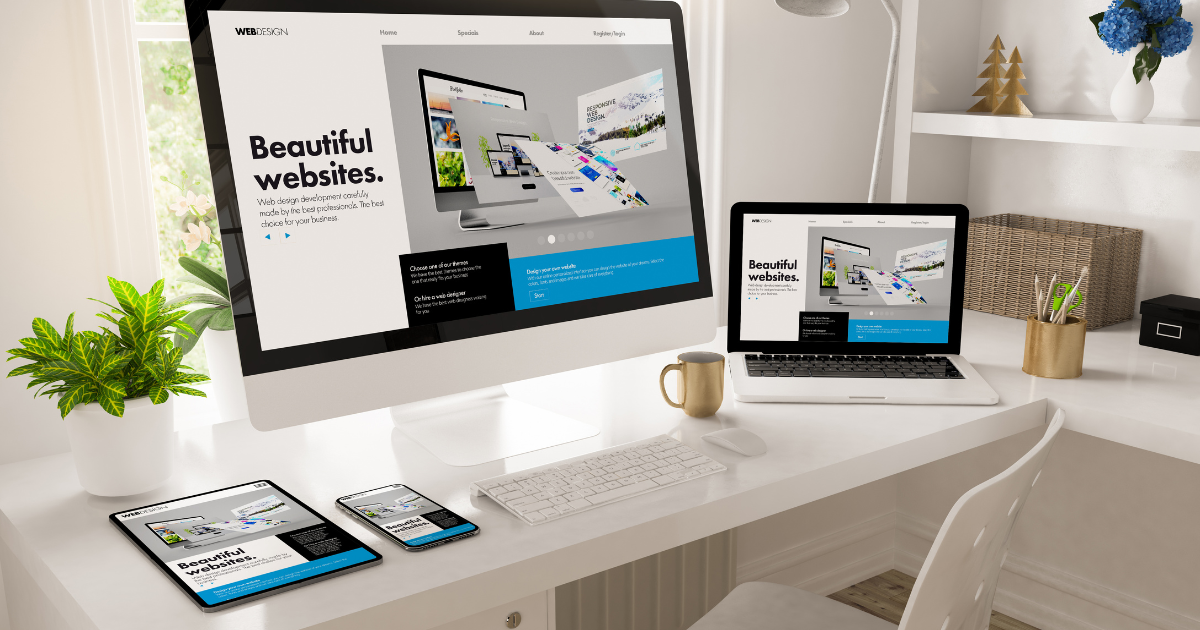
Your website is often the first interaction a potential customer has with your business.
But websites can become outdated. Design trends change, technology evolves, customer expectations increase, and what worked several years ago may no longer support your business goals.
So how do you know when it’s time for a website redesign?
Here are seven signs your business website may need an update.
1. Your Website Looks Outdated
First impressions matter.
If your website looks old, cluttered, or inconsistent with your current brand, visitors may question whether your business is keeping up.
A modern website should communicate your value clearly while providing a professional and trustworthy experience.
But redesigning a website isn’t simply about making it look newer. The design should support your audience, business goals, content, and customer journey.
2. Your Website Isn’t Mobile-Friendly
Customers increasingly access websites from smartphones and tablets.
If visitors have to zoom in, scroll horizontally, or struggle to use buttons and forms, your website needs attention.
Responsive design allows content and layouts to adapt to different screen sizes.
Lighthouse Internet Media builds websites with a mobile-first approach and tests layouts across common phone, tablet, laptop, and desktop screen sizes.
3. Your Website Is Slow
A beautiful website isn’t useful if customers have to wait for it to load.
Large images, unnecessary scripts, inefficient templates, poor hosting, and outdated technology can all contribute to performance problems.
A redesign provides an opportunity to review the technical foundation and improve performance.
Lighthouse includes optimized assets, efficient templates, sensible scripts, and Core Web Vitals checks as part of its website development process.
4. Visitors Don’t Know What to Do Next
Your website should make the next step obvious.
Visitors may want to:
- Request a quote.
- Call your business.
- Schedule an appointment.
- Purchase a product.
- Learn about a service.
- Contact your team.
If these actions are difficult to find, your website may be losing potential customers.
A good redesign should create clear conversion paths and make important actions easy to discover.
5. Your Website Is Difficult to Navigate
Visitors shouldn’t have to search through complicated menus to find basic information.
Your navigation should help users quickly understand:
Who you are → What you offer → Why you’re different → What they should do next
Lighthouse approaches website projects by considering the audience, business goals, sitemap, user experience, and information structure before development begins.
6. Your Website Is Hurting Your SEO
A redesign can improve SEO—but it can also damage existing rankings if the migration is poorly managed.
Changing URLs, removing valuable content, or failing to create redirects can cause unnecessary search visibility losses.
That’s why SEO should be considered before the new website launches.
A properly managed redesign can include:
- Clean headings.
- Editable metadata.
- Schema markup.
- XML sitemaps.
- URL redirects.
- Preserved content.
- Internal linking.
- Search Console monitoring.
Lighthouse specifically describes SEO-safe migration as part of its website builds and uses redirect mapping to protect valuable existing URLs.
7. Your Website No Longer Reflects Your Business
Businesses evolve.
You may have:
- Added new services.
- Entered new markets.
- Changed your target audience.
- Updated your brand.
- Expanded your team.
- Added new locations.
- Introduced new technology.
Your website should evolve with you.
If your current website doesn’t accurately communicate what your business does today, a redesign may help bring your digital presence in line with your current position.
A Website Redesign Should Start With Strategy
One of the biggest mistakes businesses make is treating a redesign as simply a visual project.
A successful redesign should begin by asking:
What are we trying to accomplish?
Who are we trying to reach?
What problems do customers have?
What isn’t working on the current website?
What actions should visitors take?
How will we measure success?
Lighthouse’s current web design process begins with business goals, audience, competitors, and sitemap decisions before moving into wireframes, visual design, development, testing, and launch.
Final Thoughts
A website redesign shouldn’t be about following the latest design trend.
It should be about creating a better digital experience for your customers and a more effective platform for your business.
If your website is outdated, difficult to use, slow, poorly optimized, or no longer aligned with your business goals, it may be time for a strategic redesign.
Lighthouse Internet Media combines strategy, UX, web design, development, performance, SEO, and conversion thinking to build websites designed to support business growth.
Is your website helping your business grow—or holding it back? A strategic website review can help you identify what needs to change.
Frequently Asked Questions
How often should a business redesign its website?
There is no fixed timeline. A redesign should be considered when the website no longer meets customer expectations, business goals, technical requirements, or performance standards.
Does a website redesign improve SEO?
It can, but only when SEO is properly integrated into the redesign. Poor migrations can cause ranking and traffic losses.
How long does a website redesign take?
The timeline depends on the website’s complexity, content, functionality, and approval process. Lighthouse states that most of its business website projects take about eight weeks from kickoff to launch.
Should I redesign my website or improve the existing one?
Not every website needs a complete rebuild. Sometimes SEO, performance, content, or conversion improvements are enough. A professional review can help determine the right approach.
What should a modern business website include?
A modern business website should provide responsive design, clear navigation, useful content, strong calls to action, good performance, accessibility fundamentals, security, and an SEO-friendly technical foundation.